Picky Eating Basics
When Your Toddler Only Eats Beige Foods
By The Calm Table Editorial Team · May 29, 2026 · 10 min read
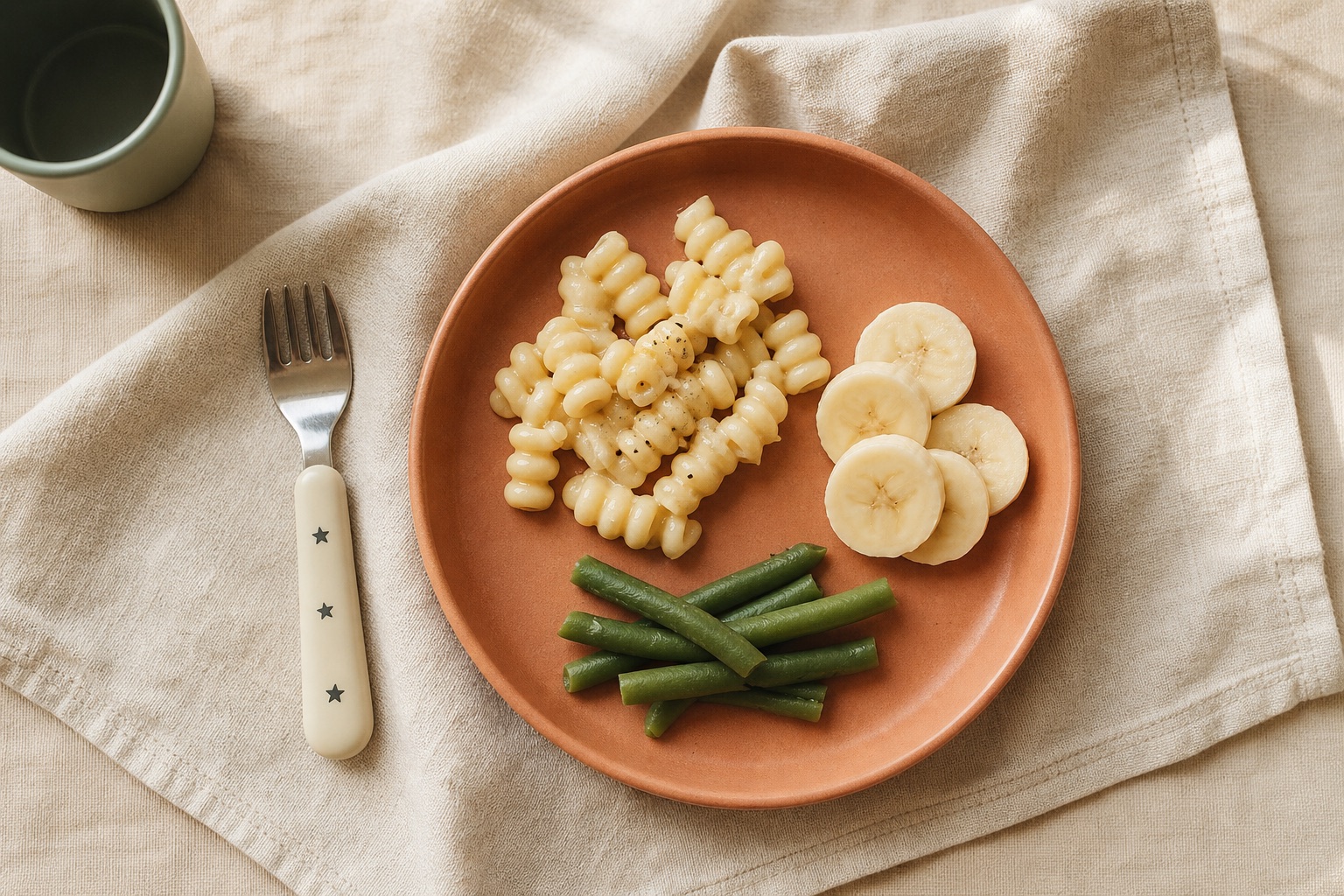
Crackers, toast, plain pasta, cereal, fries, and nuggets can start to feel like the entire menu. When a toddler only eats beige foods, parents often feel caught between two fears: pushing too hard and not doing enough. Beige foods are not morally bad, and liking predictable color and texture does not make your child difficult. The useful questions are broader: How narrow is the diet? Is the list shrinking? Can your child eat comfortably and grow as expected? With those questions in mind, you can expand familiarity without turning color into a battle.
Why beige foods can feel safe
Many beige foods are predictable. A packaged cracker usually looks, smells, and crunches the same every time, while a blueberry may be sweet, tart, firm, or soft. Plain starches also tend to have mild flavors and consistent textures. For a cautious toddler, that sameness can lower uncertainty. Preference may also reflect habit, sensory comfort, appetite, or what is regularly available. None of these explanations can diagnose your child, but they can shift the response from “How do I make them stop?” to “What features are helping this food feel manageable?”
Look at the whole pattern, not the color alone
Color is an easy shorthand, but it does not tell you everything about nutrition or feeding skill. Beige foods may include grains, dairy, eggs, beans, fish, meat, or fortified products, depending on what your child accepts. Make a neutral inventory of foods eaten reliably, sometimes, and not currently. Note textures, brands, shapes, temperatures, and settings. Also consider whether your toddler accepts water and other appropriate drinks and whether clinicians have raised growth or nutrient concerns. This inventory is information for planning, not a scorecard to discuss in front of your child.
Keep accepted foods on the menu
Removing every beige food in the hope that hunger will force variety can make meals feel unsafe and may reduce intake without creating curiosity. Continue serving familiar foods as part of meals while adding tiny opportunities to meet other foods.
Use one dependable anchor
Include at least one food your toddler usually eats at a meal, then serve other family foods nearby. The anchor does not need to be unlimited or identical every day, and it is not a prize for tasting. Rotate among accepted options when you can: toast at breakfast, rice at lunch, or potatoes at dinner, for example. Rotation preserves familiarity while showing that dependable does not always mean exactly the same product.
Avoid making color the assignment
Instructions like “Eat something green” can turn color into a warning label. Describe food neutrally instead: crisp, cool, juicy, soft, round, or warm. You can talk about color during cooking or play without linking it to a bite requirement. If your child says, “I don't eat red food,” acknowledge the observation and keep the response simple: “You don't have to eat it. It can stay on the plate.”
Free guide: 10 Phrases to Stop Saying at Dinner Tonight
Build bridges from what already works
A food bridge changes one manageable feature at a time. If your child accepts one brand of round cracker, you might place a similar cracker from another brand beside it. From plain toast, you could try toast cut differently, then toast with a small amount of familiar spread on the side. From plain pasta, consider a different shape before adding sauce. The next step should be close enough to feel recognizable, not what an adult considers the most nutritious leap. If the bridge is rejected, return to an easier step without presenting it as failure.
Offer color in very small, honest ways
Add a single berry, cucumber slice, pea, or drop of sauce beside familiar food, choosing safe textures for your child's age and skills. Keep it visible and optional. Hiding spinach in a favorite food may add an ingredient, but it does not teach comfort with spinach and can damage trust if presented deceptively. Blended foods can absolutely be served when they are normal recipes in your home; simply name them honestly when asked. The long-term aim is a relationship with food that can tolerate learning, not a one-time nutritional trick.
Let interaction come before tasting
Your toddler might help put oranges in a bowl, rinse a pepper, use tongs to move peas, or watch you cut avocado. At the table, they may tolerate a new food on a separate plate before accepting it on their own. These are meaningful steps even when no bite follows. Do not require food play if touching wet or sticky textures is distressing. Offer a utensil, a small “learning plate,” or the option to watch. Respectful exposure should stretch comfort gently, not overwhelm your child until they comply.
Support variety across the week
Instead of trying to fix every plate, choose a few repeatable opportunities. Serve one accepted breakfast with a tiny variation, include fruit or another family food at lunch, and offer a small portion of dinner alongside a familiar anchor. Eat the foods you enjoy without performing exaggerated enthusiasm. Keep portions modest and repeat options over time. General feeding guidance favors repeated, low-pressure exposure, but progress is rarely linear. A toddler may touch a strawberry one day and reject it the next; both experiences are part of learning.
Red flags that deserve professional attention
Contact your pediatrician if the accepted list is very limited or steadily shrinking; your child drops foods and does not regain alternatives; entire texture categories are impossible; eating causes panic, pain, frequent gagging, coughing, choking, or vomiting; chewing or swallowing seems difficult; meals take an unusually long time; or there are concerns about growth, hydration, energy, constipation, or nutrient status. A strong need for one exact brand or presentation can also be worth discussing when substitutions regularly lead to distress or missed meals. These signs do not identify a diagnosis on their own, but they warrant individualized assessment.
What professional support may include
Start with your child's pediatrician rather than trying to identify the cause from social media. Depending on the concern, the care team may include a registered dietitian, occupational therapist, speech-language pathologist, gastrointestinal specialist, allergist, or another qualified clinician. They may review growth, nutrient intake, oral-motor skills, sensory responses, pain, allergies, or other medical factors. Bring your food inventory and a short description of what meals look like; you do not need a perfect diary. Seek prompt medical guidance if your child cannot manage liquids or shows signs of dehydration, and follow local emergency guidance for trouble breathing or a severe allergic reaction.
A calmer goal than a rainbow plate
For now, aim for safe eating, dependable opportunities, and one small bridge at a time. A colorful plate can be visually appealing, but it is not a test your toddler has to pass. Keep familiar foods available, offer honest and optional exposure, and watch the overall pattern. If you are worried, requesting an assessment is a practical next step, not an admission that you handled meals incorrectly. Your child's current beige-food phase is information about where they feel comfortable today; it does not define every meal they will eat in the future.
Related reads
Ready to actually solve this?
The 30-Day Reset gives you the full system: scripts, meal plan, and daily guide.
Start the Reset · $27